Return to List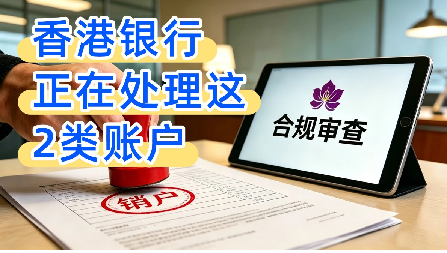
Existing investors have had their accounts closed! Hong Kong banks are currently closing down these two types of accounts. Is your account secure?
2026.06.30



Many mainland friends who come to work in Hong Kong for the first time will encounter a term that is both familiar and unfamiliar - Mandatory Provident Fund (MPF). With the word "provident fund" in its name, it is easy to associate it with the housing provident fund in the mainland at first glance. This leads to a series of questions: Is the employer responsible for the majority of the contribution? Do I have to contribute? Can I use it in the future?
Today, I'll clarify this for everyone at once - there's a world of difference between Hong Kong's Mandatory Provident Fund and the mainland's Housing Provident Fund, despite just one character difference!
First, let's clarify: What are they respectively?
Mainland housing provident fund: It refers to a system where both the employee's employer and the employee himself/herself contribute and save over a long period of time, which is used to cover expenses related to purchasing, constructing, and renovating self-occupied housing. Simply put, it is a fund specifically designed to address housing issues - it can be used for buying a house, renting a house, decorating, and loan repayment.
Hong Kong Mandatory Provident Fund (MPF): It is a statutory mandatory retirement savings system implemented in Hong Kong on December 1, 2000. Its core is to compel individuals to save for their retirement, much like a personal, exclusive pension account. It features compulsory personal savings, long-term investment, and market-oriented operation. After meeting retirement conditions, this money can be freely handled, withdrawn, or continuously invested. However, before reaching the conditions, you can only view it but not touch it.
One is for "housing savings", and the other is for "retirement savings" - with completely different purposes!
II. Who needs to pay? How much should be paid?
Mainland housing provident fund:
Cover all on-the-job employees with formal labor relations
Both units and individuals shall contribute at a rate ranging from 5% to 12% (the specific rate is determined by each region)
The contribution base has an upper and lower limit. The upper limit is generally three times the local average wage, while the lower limit is the local minimum wage standard
Hong Kong Mandatory Provident Fund:
All employees (full-time or part-time) or self-employed individuals aged 18 to 64, except for exempted individuals, must participate.
Employers must enroll their employees who have been employed continuously for 60 days or more in a Mandatory Provident Fund scheme.
The employer and the employee each bear 5%, totaling 10%.
Contributions are subject to a minimum and maximum limit:
Monthly income less than HK$7,100: Employees are exempt from contributions, but employers must still contribute 5% of their actual income
For monthly income ranging from HK$7,100 to HK$30,000: both parties contribute 5%, totaling 10%
Monthly income of over HK$30,000: The monthly contribution cap for both parties is HK$1,500
Let's take an intuitive example: For a monthly salary of HK$20,000, the employer and employee each contribute HK$1,000, totaling HK$2,000 per month. For a monthly salary of HK$50,000, both parties contribute HK$1,500 each (reaching the maximum limit), totaling HK$3,000 per month.
It is worth noting that the MPFA is currently actively reviewing the minimum and maximum income limits for MPF contributions, and is expected to submit a report to the government in mid-2026. If the proposal is implemented, the contribution ceiling may be raised from HK$30,000 to HK$40,000, and the maximum monthly contribution will increase from HK$1,500 to HK$2,000.
III. The core difference: Where does the money go? Who is in charge?
This is one of the core differences between the two.
Mainland housing provident fund:
Coordinated and managed by the government, and operated exclusively by the Housing Provident Fund Management Center
You don't need to worry about it. There's no need for you to choose investments on your own, and the returns are relatively stable
Hong Kong Mandatory Provident Fund:
Fully market-oriented operation
You can choose your own MPF investment method, select different trustees (banks or insurance companies), and independently pick fund portfolios (such as stock funds, bond funds, conservative funds, etc.), just like buying funds.
Self-financing - if the fund performs well, there will be more money when you retire; if the market experiences a shock, your account will also be affected.
All investment returns and fund dividends within the MPF scheme are exempt from stamp duty and profits tax, and the full amount of investment returns is credited to the individual's account.
In 2024, the Mandatory Provident Fund (MPF) achieved a positive return of approximately 8.82%, generating investment income of approximately HK$102.4 billion for 4.75 million members, with an average earning of approximately HK$21,500 per person. In the first half of 2026, the Asian equity fund returned even more, reaching 27.9%. However, the divergence in returns was also evident - as of June 2026, among the 397 comparable MPF constituent funds in Hong Kong, the best performer achieved a half-year return of 111%, while the worst performer fell by 14.65%.
IV. When can I withdraw money?
Mainland housing provident fund:
It is highly flexible and can be applied to various scenarios such as buying a house, renting a house, renovating, and repaying loans
In June 2026, the Ministry of Housing and Urban-Rural Development released the "Regulations on the Administration of Housing Provident Fund (Revised Draft for Public Comment)", expanding the scenarios for withdrawal from 6 to 9, including newly added situations such as renovating self-occupied housing and paying property fees
Upon retirement, the principal and interest balance can be settled in full
Hong Kong Mandatory Provident Fund:
Generally speaking, one can only withdraw the funds after retirement at the age of 65. The conditions for early withdrawal are very strict, mainly including:
Aged 60 or above and have taken early retirement (must terminate all employment and self-employment, and declare no intention of being employed again)
Leaving Hong Kong permanently (one must declare that they have no intention of returning to work in Hong Kong and provide valid documentation; the scrutiny for this reason has been tightened since 2024)
Complete loss of working ability
Suffering from terminal illness
Small balance account (with a total amount not exceeding HKD 5,000 and no balance in other MPF schemes)
Death (withdrawn by the estate representative)
After reaching the age of 65, you have the option to withdraw the funds in one lump sum, withdraw them in installments, or retain them within the plan for further investment.
V. The most concerned issue for Hong Kong drifters: paying dues to both sides, is it conflicting?
Many Hong Kong drifters are in a dilemma: should they continue to pay social security in the mainland while also contributing to the Mandatory Provident Fund in Hong Kong?
The good news is that the two-place systems are not mutually exclusive, and existing policy arrangements can prevent "duplicate insurance coverage and double contributions". According to relevant regulations, individuals who have participated in the Hong Kong Mandatory Provident Fund and have been continuously contributing can apply for exemption from participating in basic endowment insurance and unemployment insurance in the mainland, using their Mandatory Provident Fund statements as supporting documents.
Taking Nansha, Guangzhou as an example, this "cross-border recognition" mechanism can exempt up to over 70,000 yuan of social security burden for a single person.
Suggestion: If you plan to work in Hong Kong for a short term (1-3 years), it is recommended to continue contributing to the mainland social security system to maintain continuity. If you intend to develop your career in Hong Kong for a long term, you may consider applying for exemption from the mainland pension and unemployment insurance. You can retain your mainland social security account, and the contribution years will be accumulated. Alternatively, you can choose to terminate your social security relationship and withdraw the money in your personal account in one lump sum.
MPF and provident fund, just one word difference, but a world of difference. Save this article and don't get them mixed up again!


Please be sure to provide truthful personal information so that we can contact you more quickly