Return to List
MPF vs Provident Fund: A World of Difference in Just One Word! An Article Explains It All
2026.07.30



Recently, many bosses have come to ask: Why is it getting harder and harder to open an account for a Hong Kong company? I have clearly submitted all the required documents, but why am I still being rejected? My account was functioning perfectly, but why was it suddenly closed?
In today's article, we will clarify the core reasons for account rejections and suspensions in Hong Kong.
It's not that your profile is not good, but the threshold has really gone up!
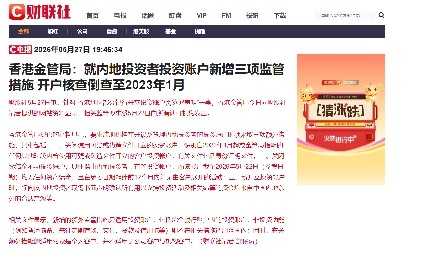
The requirements for anti-money laundering (AML) and counter-financing of terrorism (CFT) are constantly evolving, necessitating banks to strengthen their Know Your Customer (KYC) and Know Your Banking (KYB) due diligence. The Securities and Futures Commission of Hong Kong recently conducted a special inspection of 12 securities brokerage firms, identifying multiple significant deficiencies such as inadequate due diligence on account opening documents and acceptance of suspicious or forged documents. The Hong Kong Monetary Authority has also issued a regulatory circular to all authorized institutions, requiring banks to adopt stricter measures in account opening review.
Nowadays, bank audits not only focus on company registration documents, but also on real business operations. Contracts, invoices, and transaction records must all be clearly explained. Since 2026, local banks in Hong Kong have not relaxed their account opening audits for newly established companies, but have become increasingly cautious. It is more difficult for new companies, shell companies, and those without any business traces to pass the audits.
Foreign trade, e-commerce, virtual goods, collection and payment services, etc., are often subject to rigorous scrutiny. Transactions involving sensitive countries or regions carry a higher risk rating. The more complex the industry, the more supplementary documents are required.
The same set of documents may be rejected by Bank A but approved by Bank B. Even different branches and customer managers within the same bank may have different review preferences. Finding the right person and choosing the right bank are sometimes more important than the documents themselves.
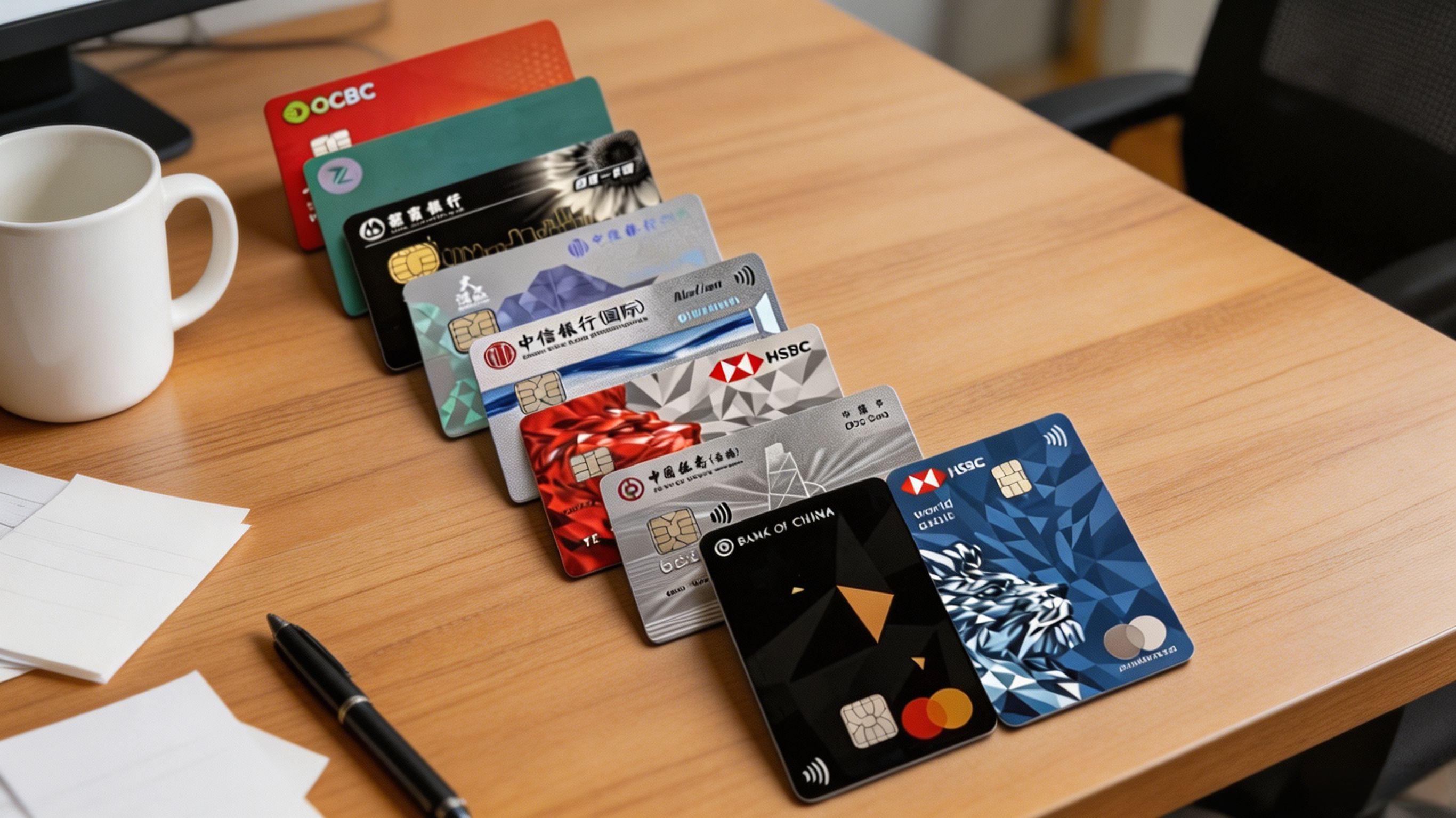
This is the most fatal problem. The logic between the contract, invoice, logistics order, and bank statement does not match:
The contract amount is 100,000, but the invoice is issued for 80,000
Shipment to the United States, payment received from Singapore
The trading time is inconsistent
Once the bank discovers any inconsistency among the "three flows" (goods flow, invoice flow, and capital flow), it will immediately suspect fraudulent transactions or even money laundering, and it's only a matter of time before the account is blocked.
Multiple layers of shareholding, nominee shareholding, and an excessive number of related parties... What banks prioritize most is whether the ultimate beneficial owner (UBO) is clear. Once the equity structure becomes so complex that it is unclear "who actually controls the company," banks will handle it directly with caution, repeatedly requesting supplementary documents, or even directly rejecting it.
Expired address proof, incomplete identity documents, blurred company documents, mismatched director signatures... These seemingly minor issues are all serious flaws in the bank's review system. Submitting supplementary documents wastes a lot of time, and even if they are submitted, they may still be rejected.
The company has been registered, but:
No real transaction records
No supplier or customer information available
No website, no business card, business introduction looks like a template
No invoice, no logistics voucher
Upon inspection, the bank realized that this was merely an empty shell. Given the high risk of money laundering, it was rejected outright.
Many applicants themselves cannot explain clearly: "We just do trade" - what products do we trade? Who do we sell to? Where do we source the goods? Where does the money come from and where does it go?
If the customer is unresponsive to inquiries, the bank cannot conduct KYC (know your customer) and can only refuse the application.
If your trading counterparties, shareholders, suppliers, or customers are from sanctioned or high-risk countries/regions, the bank will immediately raise an alarm. Even if there is only an indirect connection, it may lead to account opening failure or account closure.
Both situations are dangerous:
The account has been open for several months without any transactions → the bank suspects that you have opened it but not used it, possibly as a backup "money laundering channel"
Sudden large transactions in and out of the account, quick in and quick out → the bank deems your "funds abnormal" and triggers risk control
Nowadays, banks regularly conduct spot checks on existing accounts and require the provision of the latest business proof. If you fail to provide the required information on time after receiving the notice, your account may be frozen or closed at any time. This is not targeted at you, but your failure to cooperate is your problem.
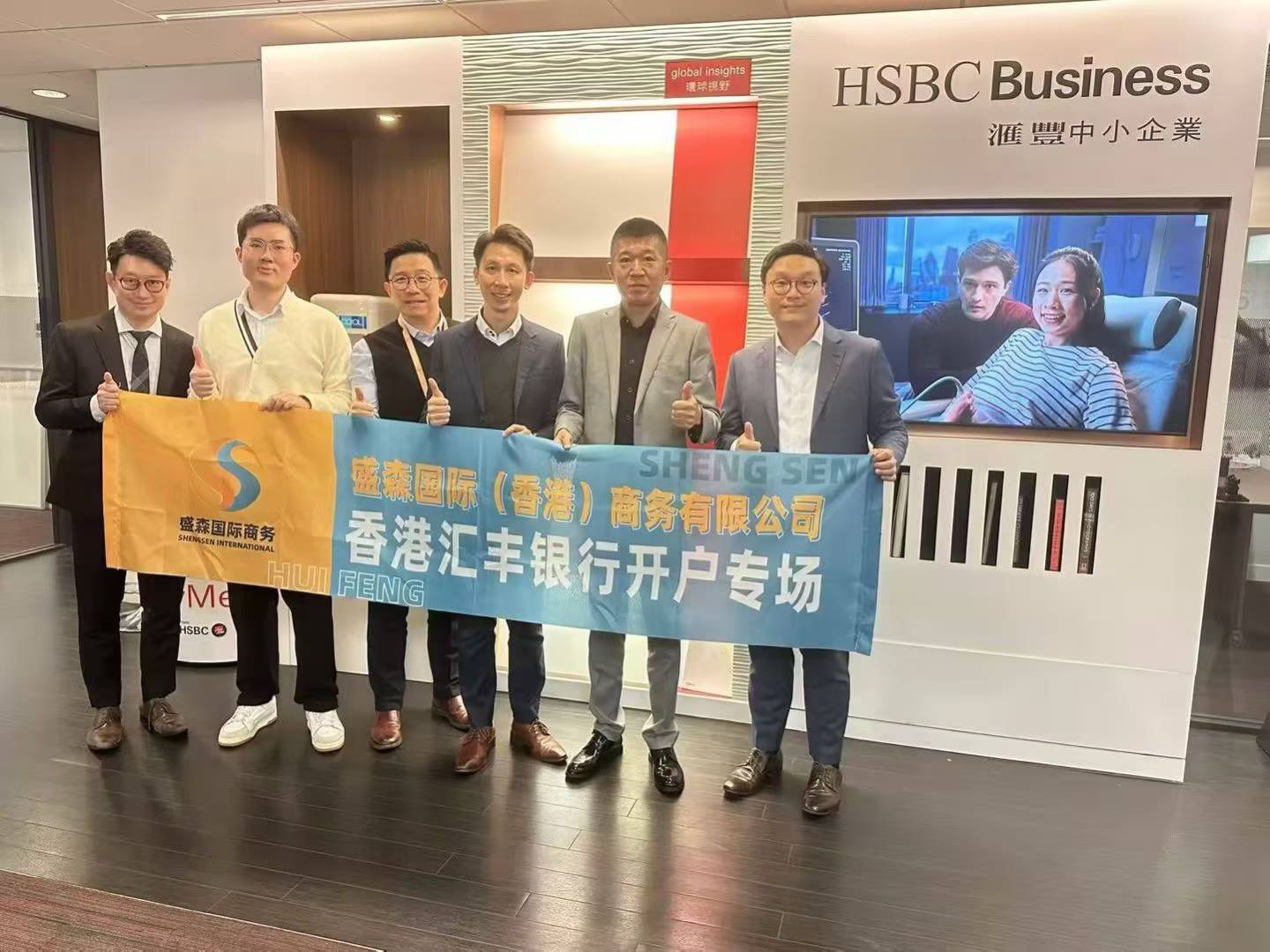
Real business - even if the company has just been established, it should be able to present a genuine business plan, customer communication records, and product or service information.
The information is complete
It's better to prepare more than to submit less. Common essential checklist:
Logical consistency - the business model, source of funds, and purpose of funds must be clearly explained and make sense.
Our team has been deeply involved in Hong Kong company registration and bank account opening services for over 10 years, and is familiar with the latest audit standards and risk control preferences of major banks. We provide professional support throughout the entire process, from document preparation, KYC interview coaching, to bank matching and recommendation.
Our advantages lie in:
✅ Precise bank matching - Based on your industry and business model, we recommend channels with higher approval rates
✅ Pre-review of complete documentation - We assist you in organizing contracts, invoices, and business certificates to ensure "consistency of the three flows"
✅ KYC interview coaching - Simulate bank interviews in advance, help you clearly explain your business model and funding sources, and ensure you are calm during on-site visa interviews
✅ Full-process follow-up - from appointment to household registration, someone will help you keep an eye on every step
When opening a bank account in Hong Kong, the more authentic the materials and the clearer the logic, the higher the success rate.
It's not that Hong Kong banks are deliberately making things difficult, but rather that compliance requirements are becoming increasingly stringent. Instead of repeatedly trial and error, and starting over again after being rejected, it's better to leave professional matters to professionals.

Bosses with account opening needs, welcome to consult. We will provide the most suitable account opening plan based on your actual situation.
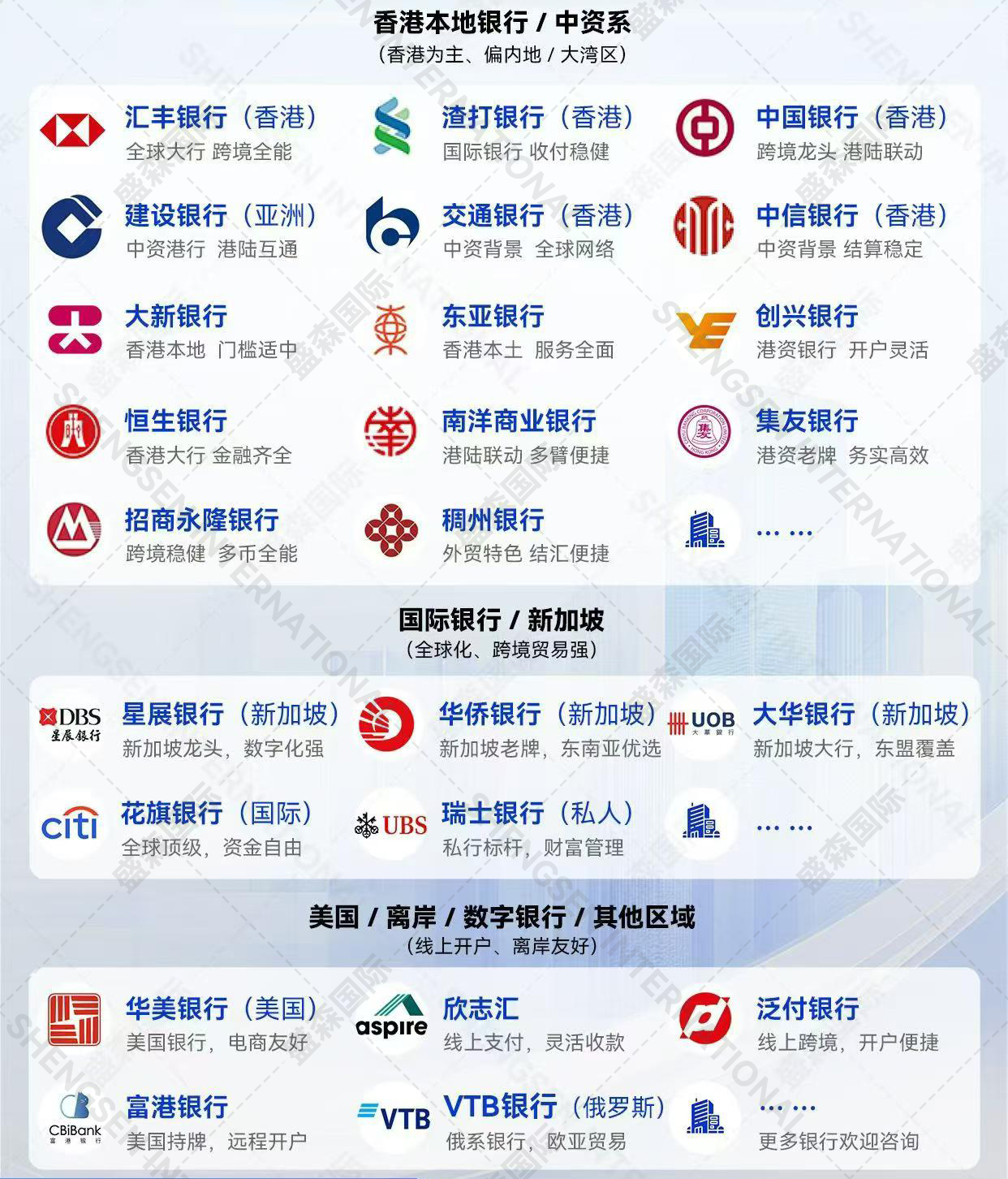
Shengsen International Business, established in 2012, operates with dual headquarters in Hong Kong and Shenzhen as its hubs. With over a decade of deep experience in cross-border business services, it relies on officially recognized compliance qualifications (including a Hong Kong secretarial license) and alliance resources from accountants and law firms to build a global service network, collaborating closely with international banks in various regions.
From business registration to financial and tax auditing, from legal support to secretarial services, professional qualifications ensure that every service is well-regulated, building a solid compliance defense line for overseas enterprises in their global operations.
New Policy Interpretation | New Foreign Investment Regulations to Take Effect on July 1st! How Can Enterprises Comply with the Regulations When Going Global?
Next article News | 2026.07.30MPF vs Provident Fund: A World of Difference in Just One Word! An Article Explains It All

Please be sure to provide truthful personal information so that we can contact you more quickly