Return to List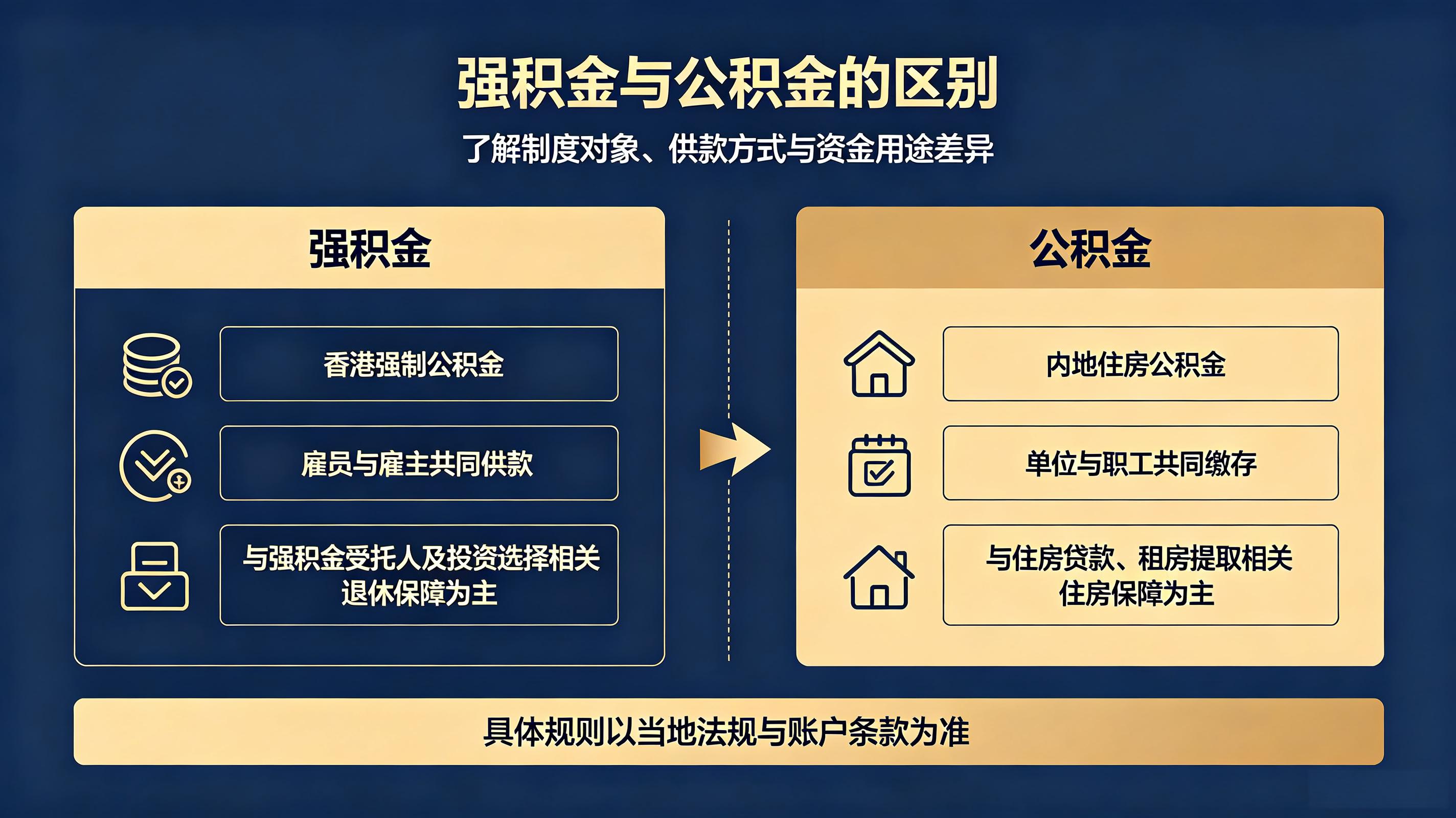
MPF vs Provident Fund: A World of Difference in Just One Word! An Article Explains It All
2026.07.30



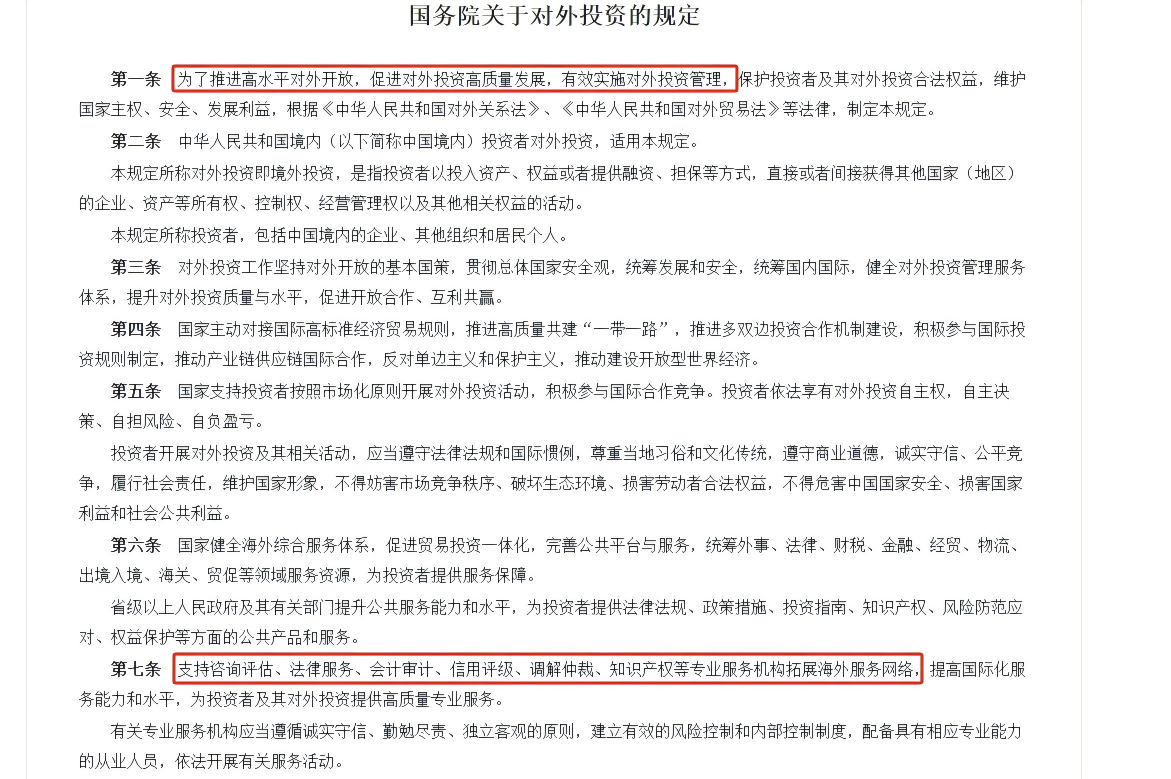
On June 1, 2026, the State Council officially issued the "Regulations of the State Council on Foreign Investment" (Order No. 837 of the State Council of the People's Republic of China), which will come into effect on July 1.
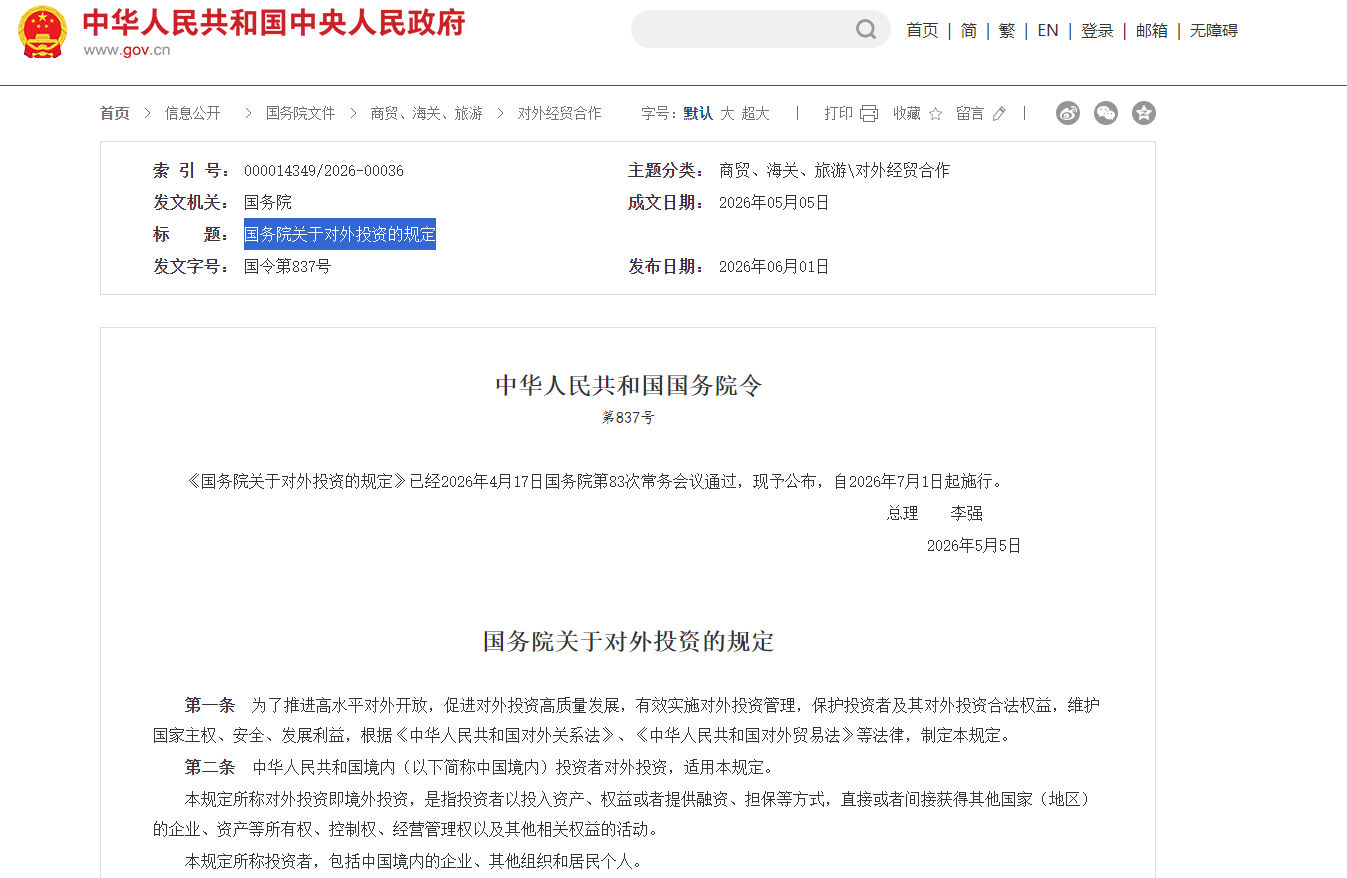
This is the first administrative regulation in China specifically governing outbound investment. It integrates and upgrades the scattered rules from multiple ministries and commissions, marking that China's management of outbound investment has officially moved from the "registration-based era" to a comprehensive, full-process and all-region compliance supervision era.
As a cross-border compliance service provider, we integrate official documents with the practical experience of industry leaders to offer you the latest professional compliance solutions, helping your enterprise implement compliance in an efficient manner.
Many people mistakenly believe that the "regulatory provisions" are restricting maritime activities. However, the first item of the new regulations clearly defines its purpose:
In order to promote high-level opening-up, facilitate the high-quality development of outbound investment, effectively implement outbound investment management, and protect the legitimate rights and interests of investors and their outbound investments.
That is to say, the country's stance towards supporting compliant outbound investments remains unchanged. The core of the new regulations is to clearly define the thresholds, so that compliant enterprises can move forward more steadily and further.
Our services: As a professional and compliant service provider explicitly supported by the government (in accordance with Article 7 of the new regulations), we will help you meet these requirements, enabling you to conduct business overseas in compliance and enjoy the corresponding support from the government.
Compared with the previous departmental regulations, the changes in this new rule are systematic. It has completely restructured the regulatory logic for cross-border investment, and every aspect is closely related to your business:
Full coverage of the entire entity and the entire area, with no blind spots.
The investors include enterprises, other organizations and individual residents within the Chinese territory.
Investments from Hong Kong, Macao, Taiwan of China, as well as all overseas regions around the world, shall all uniformly be subject to this regulation.
In simple terms: Whether you are an enterprise or an individual, regardless of which country's jurisdiction you are registered under (such as Hong Kong, China, Singapore, the United States, the United Kingdom, BVI, or Cayman), as long as you control an overseas company or transfer money/give guarantees to an overseas company, you must comply with all regulations!
In the past, people thought that "once the procedures were completed, everything was fine". However, the official text clearly states in Article 10:
Implement full-process supervision throughout the entire process, covering the entire process from investment, operation to exit.
From the project initiation and filing, to subsequent capital increase, equity transfer, and technical cooperation, every step must be in compliance. Filing is no longer a one-time process.
Article 13 of the official text specifically emphasizes:
It is prohibited to transfer technologies and data that are prohibited or restricted from export by the state through means such as dispatching technical personnel across borders, organizing personnel to work abroad, providing technical guidance across borders, or arranging cross-border training.
Special attention should be paid to the high-tech, biomedicine and data service industries. One must be vigilant against the possibility of secretly transferring sensitive technologies under the guise of "training" or "guidance".
The official original text states in Article 15:
For overseas investments that may affect or already affect national security, as well as the transfer and disposal of related assets and rights, security reviews must be conducted.
Even after your investment, if you want to transfer the equity of an overseas company, you must also comply with the requirements of the security review.
The official text's Article 27 clearly stipulates the penalty standards for violations, and it is no longer a case of "just fining and that's it":
All the above violations will result in the rejection of the application for preparatory approval within 3 years, or a prohibition on engaging in foreign investment activities for a period of more than 1 year but less than 3 years.

The new regulations not only specify "what to regulate", but also systematically outline "what to support". Compliant enterprises can enjoy the corresponding support from the state.
The country integrates service resources from multiple fields such as foreign affairs, law, taxation, finance, trade, logistics, and customs, to provide comprehensive service guarantees for investors.
The new regulations clearly support the expansion of overseas networks by professional service institutions such as "consulting and assessment, legal services, accounting and auditing, and credit rating", in order to provide high-quality professional services to investors.
Banking financial institutions provide financing services for compliant overseas investments, while policy insurance institutions offer overseas investment insurance to help you mitigate the risks associated with overseas investments.
In the event of an emergency in the investment destination, the overseas embassies and consulates will promptly provide consular protection; if you encounter investment barriers or discriminatory measures, the relevant national departments will take legal measures to safeguard your legitimate rights and interests.

Based on the new regulations and past industry cases, we have identified the three most common high-risk behaviors that cross-border investors are prone to commit:
Domestic entities that control companies in Hong Kong, Macao, Taiwan or overseas must go through the ODI registration process as required. Failure to do so or submission of false materials will trigger the severe fines and investment bans mentioned above.
The country classifies foreign investment into three categories: encouraged, restricted and prohibited.
Prohibited items: Gambling, pornography, unauthorized military production, illegal transfer of restricted technologies, none of these can be touched.
Restricted category: Real estate, hotels, movie theaters, and equity investment platforms without any real business operations. Such entities must obtain permission before they can commence operations. Engaging in prohibited projects without authorization will result in more severe penalties than not having undergone registration.
Article 14 of the new regulation clearly states: The management of fund remittance shall be carried out in accordance with relevant laws and regulations.
According to the foreign exchange management regulations, the individual's annual convenient foreign exchange purchase limit of 50,000 US dollars is only for personal use (actual consumption expenditure) and cannot be used for capital injection into overseas companies or for business turnover. Splitting up the foreign exchange purchase among multiple individuals and transferring funds to overseas companies has been clearly classified as an illegal act. In the past, a large number of customers have had their accounts frozen and been blacklisted due to this. After the new regulations are implemented, the verification in this field will be even stricter.

The second item of the official text clearly sets out the criteria:
As long as the investor is a domestic investor (enterprise/other organization/resident individual) and the purpose is to obtain the ownership, control, and management rights of an overseas enterprise or assets (including capital injection, shareholding and control, providing financing/guarantee), regardless of whether the source of funds is from within the country or is legally retained abroad, it falls within the scope of the new regulations' supervision for outbound investment.
Scene
Description
Pure cross-border goods/services trade
Conducting import and export and online services solely through mainland companies, without establishing any overseas entities. Funds are settled in compliance through a third-party payment platform.
Personal consumption abroad for personal use only
such as traveling, studying abroad, seeking medical treatment, visiting relatives, etc., without involving the operation of foreign enterprises.
Non-operational overseas representative offices
only establish liaison offices/branches, do not have legal person status, do not sign contracts, and do not engage in business activities.
Non-controlling financial investments
Investing in overseas stocks, public funds, bonds, etc. through compliant channels, without obtaining control over the target enterprises.
Only open a temporary account abroad
Only use it for temporary receipts and payments, and not for registering an overseas company or purchasing long-term assets.
Scene
Corresponding to the filing type
Domestic enterprises holding equity in overseas companies (having actual control, regardless of whether they have made investments)
ODI registration
Investing funds from within the country into overseas companies, providing shareholder loans or guarantees for overseas companies
ODI registration
Profits of overseas companies must be remitted back to the domestic parent company
ODI registration
There are plans for overseas financing, listing or reinvestment in the future.
ODI filing / Registration under Document No. 37
Domestic individual residents' investment and financing through an overseas special purpose vehicle (SPV)
Foreign exchange registration under Document No. 37
As long as an entity within the country holds equity in a foreign company and can control its business decisions (even if only for foreign exchange collection), it falls under the category of "obtaining control rights" in terms of outbound investment. Such investments must go through ODI registration or the 37th document registration. Otherwise, future profits cannot be legally repatriated, and bank accounts may be frozen at any time.
Domestic investors can establish overseas companies using their legally retained funds from abroad. Although they do not need to go through the foreign exchange registration process for capital outflow at present, their investment activities are still subject to the new regulations. In the future, when there are matters such as equity transfer, profit repatriation, or asset disposal, they still need to complete the compliance procedures; otherwise, they will be regarded as illegal foreign investment.
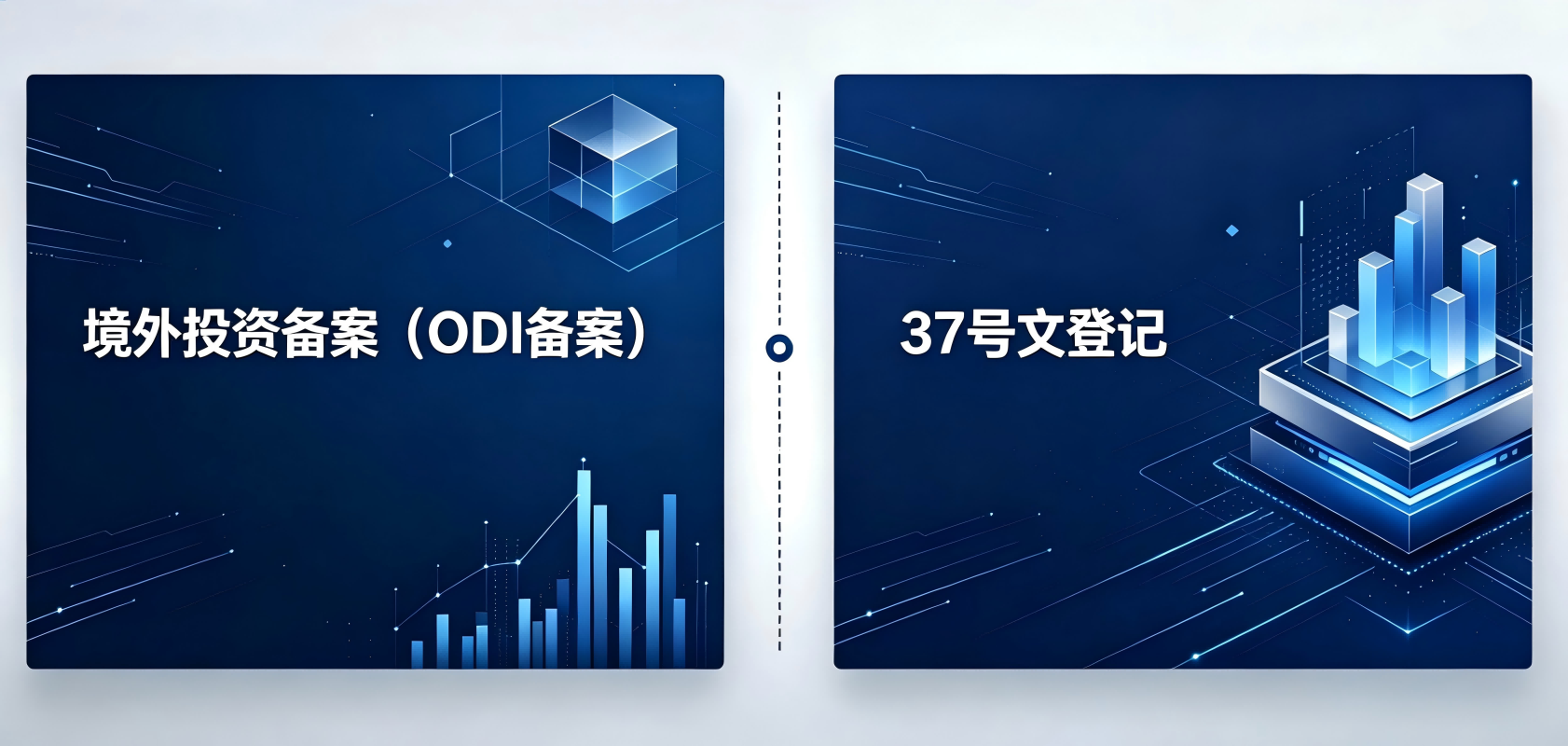
Many customers cannot distinguish between these two core registrations. To put it simply and clearly:
ODI Registration: The "passport" for enterprises to go global. It is applicable to cases where domestic enterprises hold overseas companies, and it addresses the issues of legal outbound capital and profit repatriation for these enterprises.
Registration under Document No. 37: The "identity card" for personal overseas assets. It is applicable for domestic residents holding overseas SPVs, addressing the issues of personal equity confirmation and the repatriation of earnings.
The company provides funds and holds shares in an overseas company → Apply for ODI registration
When an individual invests their own money, holds the controlling stake in an overseas company, and has the need for financing / listing / capital return → apply for registration under Document No. 37
The authorities have clearly stated: The new regulations do not apply retroactively. Investments made before July 1st do not need to go through the filing process again, but new investments made after July 1st must comply with the regulations.
Strict supervision is not about closing the door to overseas expansion; rather, it is about delineating the boundaries of compliance and cracking down on illegal operations that bypass regulations. Genuine and compliant cross-border business can legally proceed as long as it completes the formal registration procedures.
So what are the core processes for enterprises to conduct overseas compliance? We can offer professional support throughout the entire process:
The ODI filing is the only legal channel for domestic enterprises to transfer funds abroad and repatriate profits. It requires the completion of three steps simultaneously: project approval by the National Development and Reform Commission, filing with the Ministry of Commerce, and foreign exchange registration with the foreign exchange administration. All three steps are indispensable. Any funds that are transferred abroad without filing will face confiscation of illegal gains and heavy fines.
After the filing is completed, the funds need to be taken over by a legal entity. In China Hong Kong, due to the tax incentives and the freedom of capital movement, it remains the preferred choice. Singapore, the United States, the United Kingdom, BVI, and Cayman Islands also have their own applicable scenarios. When making a choice, one needs to comprehensively consider the tax cost, the convenience of account opening, and the subsequent maintenance cost. One cannot just seek the lowest price. We will match the optimal registration location based on your business scenario (cross-border e-commerce, listing, setting up a factory), and handle the registration, account opening, annual review, and tax filing throughout.
The most common structure is "domestic parent company - Hong Kong holding company - target country operating entity". This can be flexibly adjusted: for cross-border e-commerce, the Hong Kong company can handle the unified foreign exchange collection; for setting up factories in Southeast Asia, an additional Singapore layer can be added; for listing and financing, the Cayman Islands layer can be chosen. We will plan for you the profit repatriation, tax optimization and exit path in advance.
Compliance is not about paying more taxes; instead, it can reduce tax burdens through a reasonable structure. For instance, offshore income in Hong Kong can apply for a capital gains tax exemption. By leveraging the tax avoidance agreements between the mainland and Hong Kong as well as multiple countries, the withholding tax rate for dividends and royalties can be reduced to 0% - 5%. All planning is based on real business operations, ensuring consistency in business flow, capital flow, and contract flow.
The era of unregulated overseas operations is over. Now we are in a new stage where "compliance is king". Taking the initiative to complete compliance adjustments is the foundation for the long-term development of enterprises. If you have any questions regarding company registration in Hong Kong/overseas, ODI filing, or compliance rectification, please feel free to contact us for detailed communication.
Declaration: The content and images of this article are sourced from public information. The copyright of the related brand, product, and institution images belongs to their respective rights holders. If there is any improper use, please contact us for handling. This article is only for industry information sharing and does not constitute any legal advice, business commitment, or account opening/investment guidance. The specific compliance requirements should be based on the latest regulations of the official institutions. If you have any questions, it is recommended to consult our company or professionals.
Since its establishment in 2012, Shengsen International Business has assisted over 100,000 enterprises in completing their compliance overseas expansion from the mainland to Hong Kong and then to the global market, providing full-cycle one-stop services.
Professional team: 100+ experienced tax and compliance advisors, with 70% of the members having over 8 years of industry experience.
Dual-headquarters advantage: Dual headquarters in Hong Kong and Shenzhen, with physical operations, efficient and transparent service response
Compliance qualifications: Hong Kong TCSP licensed secretarial company + accounting firm, providing a complete chain of compliance services
Banking resources: Deeply cooperate with over 30 international banks to facilitate the efficient opening of Hong Kong accounts.
Experience endorsement: Have served over 100,000 enterprises, with an annual audit pass rate of 100% and a customer retention rate exceeding 96%
Full-service solution: registration, account opening, annual review, tax audit and more - all in one, providing a comprehensive solution to cross-border challenges.
For consulting services, please scan the customer service QR code below or call (15302790432, the same number for WeChat), and we will arrange a senior cross-border tax and finance consultant for you to provide one-on-one professional interpretation and customized solutions.
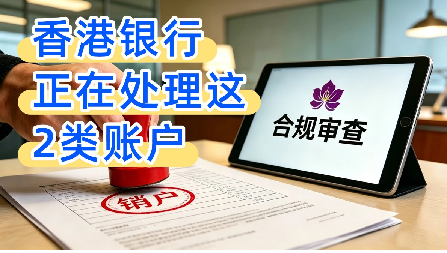
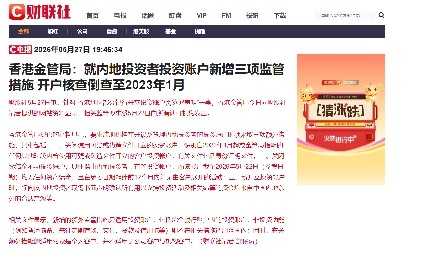
Hong Kong account opening supervision takes another step up! New regulations for individual accounts have been introduced. Will company accounts also be subject to stricter restrictions? Attached is a
Next article News | 2026.07.30MPF vs Provident Fund: A World of Difference in Just One Word! An Article Explains It All


Please be sure to provide truthful personal information so that we can contact you more quickly